
For booking and other inquiries about the The Anvil Orchestra, please email booking@theanvilorchestra.com.
General Technical specs for their shows can be found here. For specific films, contact booking@theanvilorchestra.com.
For media inquiries, please email press@theanvilorchestra.com
NOTE: Metropolis, Man with the Movie Camera and The Lost World require a third member, percussionist Larry Dersch. All others require only the duo of Miller and Donahue.
FILMS THE ANVIL ORCHESTRA HAVE IN REPERTOIRE.
All films are from the Golden Age of the Silent Era 1920-1929.
METROPOLIS. 1927, Germany. Directed by Fritz Lang. (Trio)
This early Sci-Fi masterpiece is one of the most influential films ever made. You can clearly see its echoes in Blade Runner and many other films. This version is the 2010 version which includes 20 minutes of newly found footage added from South America. Adolph Hitler was so impressed by Metropolis that he asked Fritz Lang to work for his newly formed political party. Fritz Lang refused and fled to America. He continued making films in Hollywood. The film has, literally, a cast of thousands, and its epic nature is equaled by The Anvil Orchestra’s intensely rhythmic and atmospheric score.
New for 2025! NOSFERATU (1922. F.W. Murnau).
Nosferatu (a Symphony of Horror) is the primordial Vampire movie. The image of Count Orlok, the vampire with dripping hands and dripping teeth, is imbedded in cinematic history. In the war of creepy vs. campy, creepy wins out in this film, hands down. Transylvania was never so disturbing.
New for 2025! THE ADVENTURES OF PRINCE ACHMED 1926. Animation. Directed by Lotte Reiniger.
Standing Ovation at the premier at the National Gallery of Art, Washington, D.C. on Jan.5, 2025.
The story is based on elements from the One Thousand and One Nights. The film features a silhouette animation technique Reiniger invented which involved manipulated cutouts made from cardboard and thin sheets of lead under a camera. This technique is similar to Javanese shadow puppets, but the film is her own. This is the oldest surviving animated film.
THE CABINET OF DR. CALIGARI. 1920. Directed by Robert Wien
The classic German Expressionist horror film, newly scored by The Anvil Orchestra. If there ever was a film for halloween (or any time one wants to leave the rational world far, far behind), this is it. The Anvil Orchestra’s score is atmospheric layered with a creepy other-worldly feel that matches the extreme visuals.
Performances of this film have garnered rave responses. From the Roger Ebert Film Festival: “this is the best score you have ever done.”
THE GENERAL. 1926. Directed by and starring Buster Keaton.
Buster Keaton is a southerner who is in love with both his train (he is an engineer) and his gal. He foils a Union Army raid against his Confederate homeland in typical Keaton bumbling manner, but wit a brilliance that only he can conjure up. The General makes many lists as one of the greatest films of all time.
UNDERWORLD. 1927. Directed by Josef von Sternberg.
Underworld is the defining gangster film from the silent era. It has been quoted by many films which followed in the talkies. The gangster leaders really are not good people, but honor and sympathy still abound in the film. The score is dramatic with a jazz/bluesy undercurrent, from shoot-outs to flowering romance.
BLACKMAIL. 1929. Directed by Alfred Hitchcock.
Alfred Hitchcock’s last silent film. The sound version of Alfred Hitchcock’s Blackmail has been widely shown; far more rare is this simultaneously-shot (and subtly different) silent version, which may well be Hitchcock’s greatest achievement of the silent era. The gripping story of a young British woman and her detective boyfriend begins conventionally, but quickly spirals into an unpredictable tale of terror and suspense.
THE LOST WORLD. 1925. Directed by Harry O. Hoyt. (Trio)
This primordial dinosaur epic is based on Sir Arthur Conan Doyle’s story. Our British scientists argue and bicker, then boat across the Atlantic to an obscure plateau in Brazil where dinosaurs, volcanos and primitive humanoids harass them endlessly! The film has more than one relationship to KING KONG – in fact the same Stegosaurus model was used in both films. It is a rousing adventure where time has stood still.
MAN WITH THE MOVIE CAMERA. 1929, Russia. Directed by Dziga Vertov. (Trio)
This uber-classic of Russian avant-garde film-making helped define the edges of film for years to come. “A day in the life of Russian cities,” this film has no linear plot other than the unfolding of the day. But nonetheless is extremely watchable and entertaining. By the end, the energy virtually explodes, along with the audience’s expectations. An amazing film by every measurement. It was voted “the Best Documentary of all time” by the British Film Instituted in 2019.
A PAGE OF MADNESS. 1926. Japanese. Teinosuke Kinugasa.
One of the rare Japanese silents to survive WWII, this film is unlike anything you’ve ever seen. Set in an insane asylum, it’s often hard to tell if the viewer is seeing through the inmates’ or the caretakers’ eyes. It is a visual treat matched only by Alloy’s willingness to follow the film where-ever it leads.
The PHANTOM OF THE OPERA. 1925. Starring Lon Chaney. Directed by Rupert Julian
The original Phantom of the Opera, with Lon Chaney’s “master of a thousand faces” in full force. Horror and confusing plot lines were never so well intertwined. Despite the obvious warp in the Phantom’s personality, by the end of the film Chaney’s pathos elicits true sympathy.
THE HISTORY OF THE CIVIL WAR. 1921. Directed by Dziga Vertov
The Anvil Orchestra’s first new score is for this documentary of the Civil Wars that followed the Russian Revolution. It was only shown once – in 1921. 100 years later, it was shown again at IDFA in Amsterdam with The Anvil Orchestra. I “A Musical Triumph!” (Nikolai Izvolov, archivist, Nov. 2021). “”An excellent live score by The Anvil Orchestra, alternately martial and mournful…” (Business Docs live review, Nov. 2021).
New for 2026
Berlin, Symphony of a Great City. 1927 directed by Walter Ruttmann. German.
The film is an example of the “City Symphony” film genre. It portrays the life of a city, mainly through visual impressions in a semi-documentary style, without the narrative content of more mainstream films, though the sequencing of events can imply a kind of loose theme or impression of the city’s daily life.
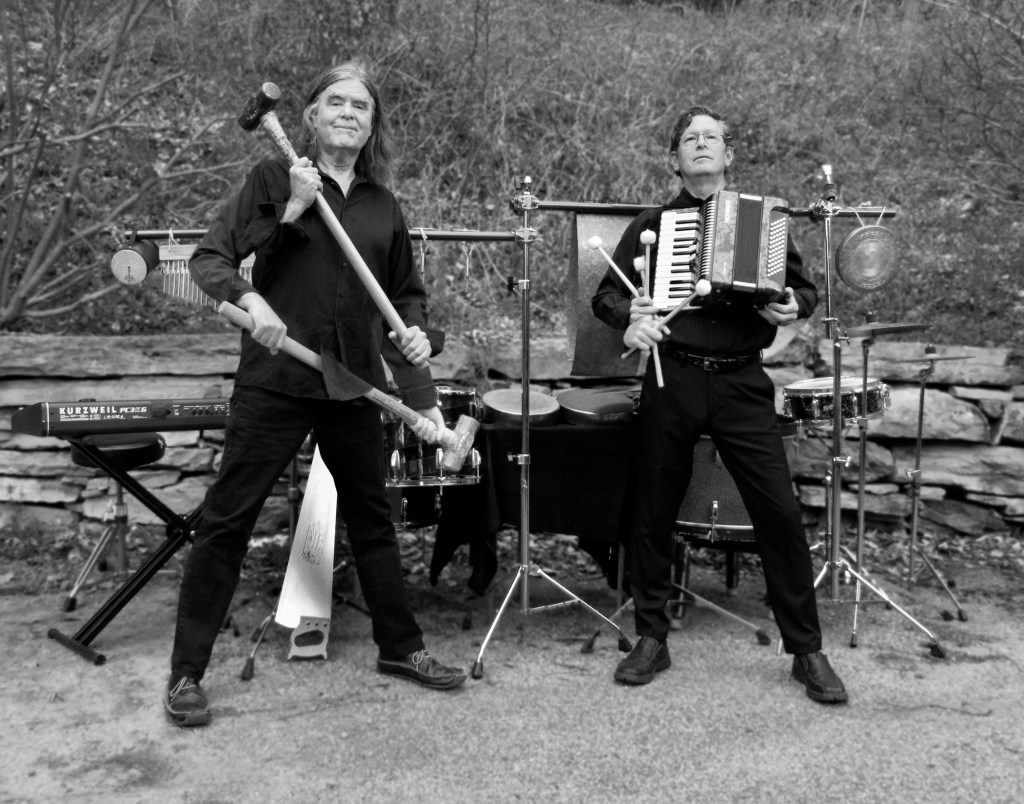
 The Anvil Orchestra